



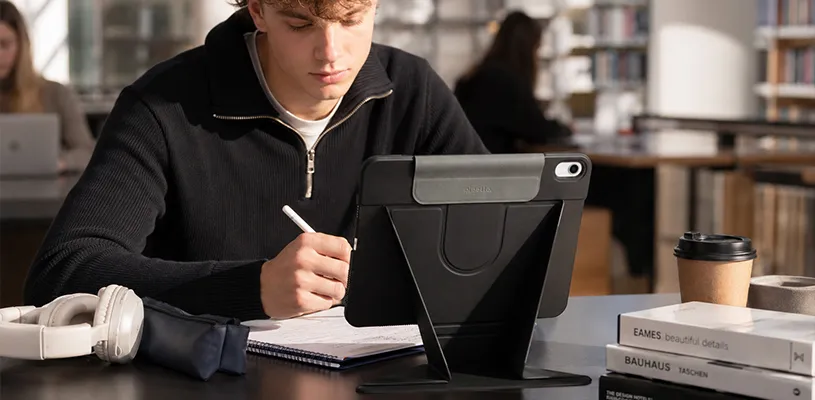
An iPad has become one of the most common study tools today. For many students, it replaces both notebooks and course books, and sometimes even the regular laptop. At the same time, it’s easy to underestimate how much difference the case itself makes in everyday use when the tablet is used for hours each day between lectures, the library, and group work.
Many people choose a case mainly for its looks or price, but for studying, function matters just as much. A good iPad case can make note-taking more comfortable, protect the tablet in a backpack, and make the Apple Pencil much easier to use. You often only notice after a few weeks how big the difference really is between a basic standard cover and a well-designed case built for everyday use.
A good stand makes a bigger difference than you think
When you use an iPad for studying, you quickly notice that the screen angle matters a lot. A thin standard cover is often perfectly fine for protecting against scratches, but it becomes less comfortable when you sit for long periods and write with the Apple Pencil or read PDF files and presentations during lectures.
Cases with fold-out stands make it easier to switch between different positions depending on what you’re doing. A lower angle works better for note-taking, while a more upright position is better for video meetings, lectures, or when you’re using a keyboard. It’s a fairly small detail on paper, but one you quickly start to appreciate when the iPad is used for several hours a day.
Protection matters in a student bag
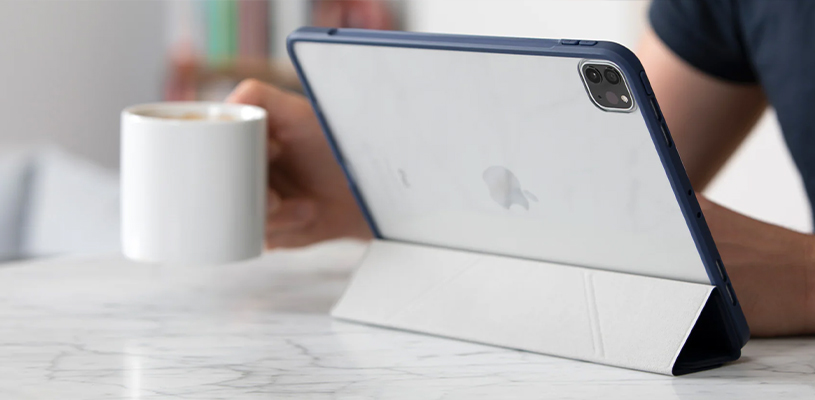
In a school environment, an iPad is exposed to much more wear and tear than many people realize. It gets tossed in among chargers, books, and keys in a bag, used on hard tables, and moved constantly between different environments throughout the day. That’s why the thinnest possible cover isn’t always enough if you actually want to protect the tablet over time.
A case with better corner protection and shock absorption often makes a bigger difference than you first expect, especially if you commute or carry your iPad around every day. And it’s not just about major drops, either. Small bumps, pressure in a bag, and everyday wear are often what eventually leave marks on both the screen and the casing.
The Apple Pencil needs to work smoothly too
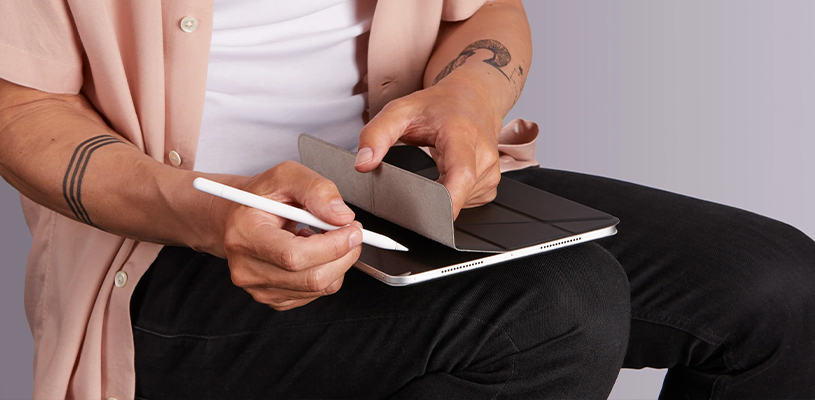
For many students, the Apple Pencil is almost as important as the iPad itself. That’s why it quickly becomes frustrating if the pencil doesn’t have a clear place or has to be removed all the time to charge. A good case lets the Apple Pencil stay magnetically in place while charging works as usual.
It may sound like a small detail, but it makes everyday use much smoother, especially on hectic days with several lectures and group projects back to back. Many people also quickly notice that the risk of losing the pencil decreases when the case is actually designed around how the Apple Pencil is used in practice.
Small features matter most after a few months
One feature that’s often forgotten is auto sleep/wake, meaning the iPad automatically wakes when you open the case and goes to sleep when you close it. It feels fairly obvious once you get used to it, but it actually helps both battery life and the user experience during long study days.
When you open and close your iPad several times between classes, breaks, and library sessions, it quickly becomes a feature you appreciate more than you first expected. It’s also a good example of how a well-designed case can make the whole experience feel a little smoother without making the tablet bigger or bulkier.
Which iPad case is best for studying?
There isn’t really one single right answer, because different programs have different demands. If you study design, illustration, or photography, a stable writing position is almost the most important thing, since the Apple Pencil is used constantly. If you’re studying more theoretical subjects, low weight and easy transport may feel more important.
For anyone who commutes a lot, protection is often more important than the thinnest possible design, while others may prefer a case that works just as well for Netflix in bed as for taking notes during lectures. The main thing is really to choose a case that fits how you actually use your iPad in everyday life, not just the one that looks best in product images.
FAQ
Do you really need an iPad case for school?
Yes, especially if the iPad is used daily and carried between home and school. A good case protects both the screen and the corners from wear and bumps.
Which iPad case is best for note-taking?
Cases with a fold-out stand and multiple angles usually work best with the Apple Pencil and note-taking apps.
Is Apple Pencil support important?
For most students, yes. It makes both charging and storage much more convenient in everyday use.
What does auto sleep/wake mean?
It means the iPad automatically wakes when you open the case and locks when you close it.
Are thinner cases worse?
Not always, but thinner models often provide less protection against drops and bumps than sturdier alternatives.